
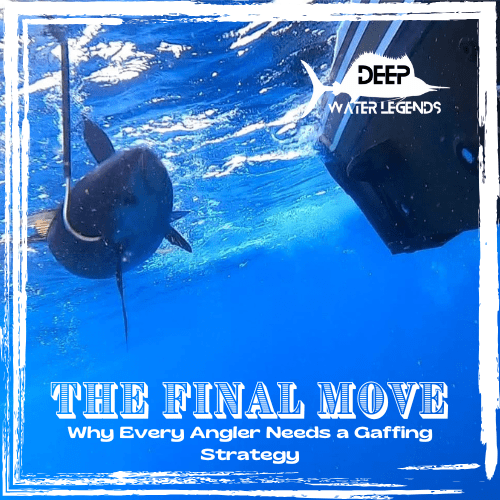
Why every angler needs to have a gaffing strategy
There’s nothing quite like the chaos on a boat when you’re hooked into a big fish. The adrenaline is pumping, the reel is screaming, and the crew is locked in, focused on one thing—getting that fish in the boat. But as the fish nears, that initial excitement needs to shift into a well-coordinated execution. Without a solid game plan, the difference between victory and heartbreak can come down to a split-second mistake. Nothing stings worse than losing a trophy fish right at the boat because of miscommunication or poor planning. That’s why having a gaffing strategy isn’t just important—it’s essential.
The Importance of Pre-Planning
When a big fish is on the line, everyone on board needs to know their role ahead of time. Pre-determining responsibilities eliminates confusion when the pressure is on. Who’s driving the boat? Who’s on the reel? Who’s leading the line? And most importantly, who’s taking the shot with the gaff? These are questions that need answers before the fish ever gets within striking distance.
For truly large fish, having a harpoon ready and a second gaff man on standby can mean the difference between a successful landing and a lost fish. Designating a single person to call out driving orders to the captain is also a game-changer, helping to avoid the chaos of multiple voices shouting conflicting instructions. In some situations, using hand signals to communicate with the captain ensures clear direction without unnecessary noise and confusion. Another key part of the plan is deciding in advance which side of the boat the fish will be landed on. In most cases, it makes sense to bring the fish to the side with the door, making for a smoother and safer landing. With smaller fish, this is less critical, as anything under 100 pounds can often be lifted over the rail without issue.
Execution: The Moment of Truth
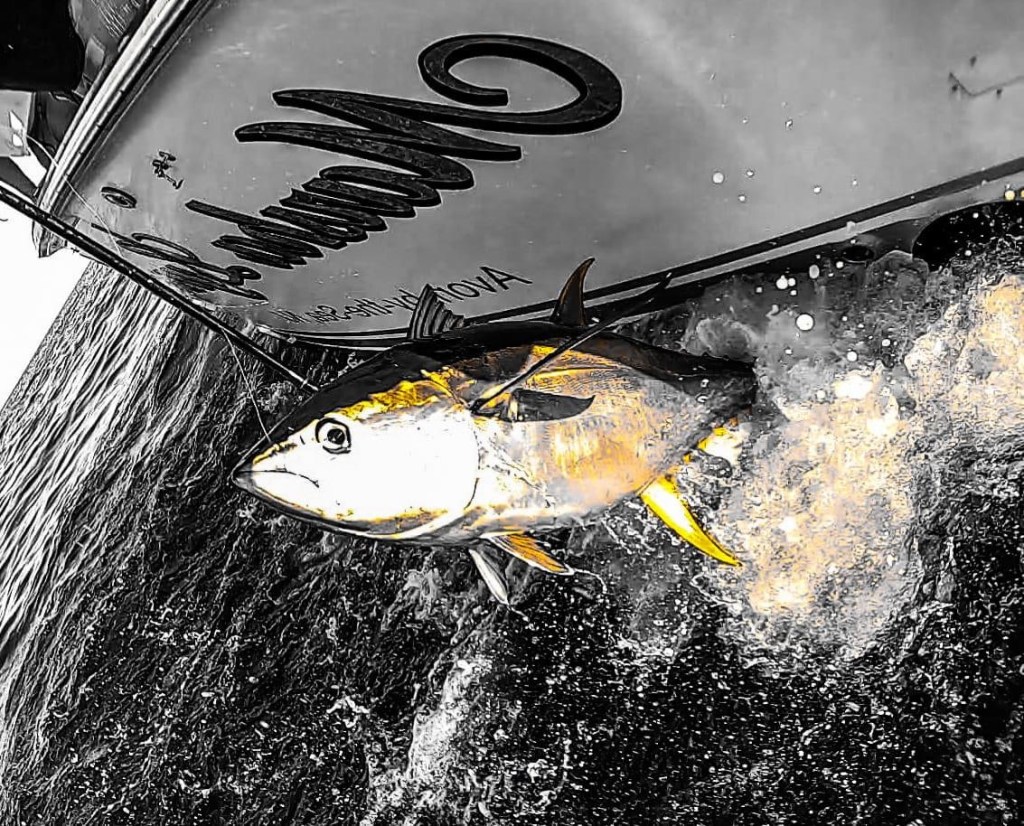
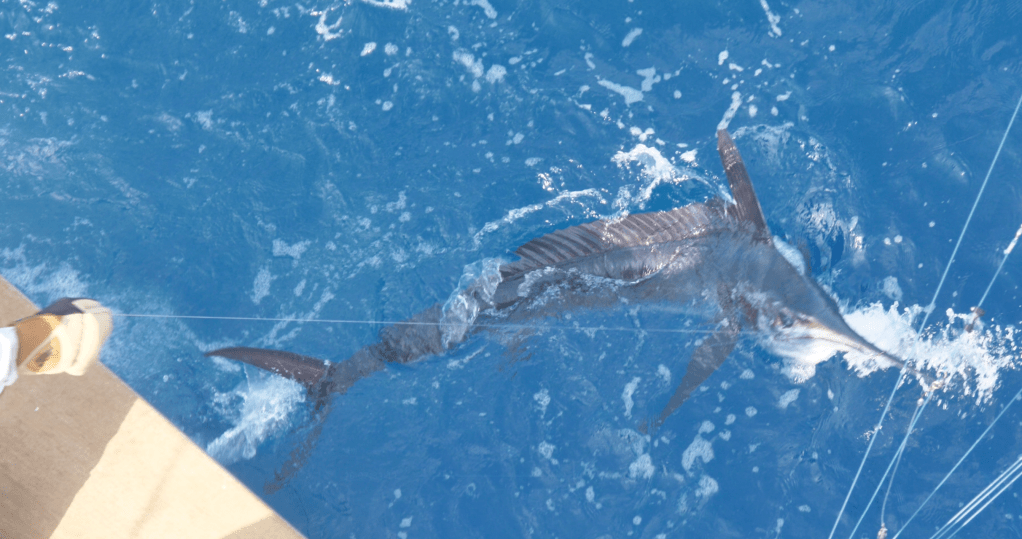
As soon as the fish gets within 50-100 feet of the boat, it’s time to lock into position. Everyone should shift into their assigned roles, ready to execute the final move. The leader man must work closely with the angler to ensure the line stays free of the boat and out of the motors, all while guiding the fish toward the predetermined landing side. The gaff man needs patience. Rushing a gaff shot is a surefire way to botch the landing. As the saying goes, slow is smooth, and smooth is fast. A poorly placed gaff can destroy valuable meat or, worse, send you into the water if the fish surges at the wrong moment. The ideal shot is clean and controlled—never reckless.
Once the first gaff is in, the second gaff man should immediately secure the fish if needed, ensuring there’s no last-minute escape. Working together, the crew lifts the fish over the rail and onto the deck.
Securing the Catch and Getting Back in the Action
The job isn’t done once the fish is in the boat. The first step after landing is backing off the reel’s drag. If the fish thrashes and somehow slips the gaff, this prevents the rod tip from snapping and avoids pulling the hook. Only once the fish is truly secured does the celebration begin. But there’s no time for a long victory lap. As soon as the fish is stowed safely, it’s time to reset, get the lines back in the water, and get back on the prowl.
Conclusion
A big catch isn’t just about the fight—it’s about the final move. Having a solid gaffing strategy ensures that when the moment of truth arrives, the team executes smoothly, and the fish ends up on deck, not as another story about “the one that got away.” Preparation, communication, and patience turn chaos into success, and when everything comes together, there’s no better feeling in the world.


Leave a comment